How to Choose a Wine Fridge: The Complete Buying Guide

Why a Wine Fridge Is Worth the Investment
A standard kitchen fridge runs at 2-4°C and fluctuates constantly in humidity — both conditions accelerate cork drying and disrupt the slow micro-oxidation wines need to develop. A dedicated wine fridge holds temperature within ±0.5°C and maintains 50-70% relative humidity, the range recommended by the International Organisation of Vine and Wine (OIV) for long-term bottle preservation. Even an entry-level model protects a €30 bottle far better than the back of your regular fridge.
Key Takeaways
- The OIV recommends 10-15°C for aging; temperature swings above ±3°C damage corks within months
- Thermoelectric models run at 25-35 dB (near-silent) but suit collections under 20 bottles in temperate climates
- Dual-zone fridges let you serve whites at 8-10°C and reds at 16-18°C from the same unit
- Buy 20% more capacity than your current collection to leave room for new purchases
Thermoelectric vs Compressor: Which Technology Fits Your Needs?
Thermoelectric wine fridges cool using the Peltier effect, with no moving compressor parts. They run at 25-35 dB and create zero vibration, which matters because sustained vibration disturbs wine’s sediment and speeds up chemical breakdown. The trade-off: thermoelectric units lose efficiency above 25°C ambient temperature and can’t usually cool more than 8-10°C below room temperature. They work well in apartments and kitchens where ambient temperature stays moderate year-round.
Compressor wine fridges work like a conventional refrigerator, cycling refrigerant through coils. They maintain target temperatures regardless of room heat and handle larger collections efficiently. Noise levels range from 40-55 dB, and vibration is greater, though modern models use anti-vibration mounts to limit the impact on stored wine. For cellars, garages, or anyone building a collection beyond 30 bottles, a compressor unit is the right call.
Which should you choose? For quiet storage of up to 20 bottles in a temperature-controlled room, thermoelectric wins. For everything else, go compressor.
Single Zone vs Dual Zone: Do You Need Two Compartments?
A single-zone fridge holds the entire cabinet at one temperature, which works well for collectors who age everything at 12-14°C and bring bottles to serving temperature separately. A dual-zone model splits the cabinet into two independent compartments — typically one for whites (8-10°C) and one for reds (16-18°C) — so bottles go straight from storage to glass. Dual-zone fridges cost 20-30% more but eliminate the need for a second unit or a cooling bucket at the table.
If you drink wine at least twice a week from a mixed collection, dual-zone is the better investment. If you cellar everything and only open one bottle at a time, single-zone is simpler and costs less to run. For the full rules on correct wine storage, including bottle position and light exposure, see our dedicated guide.
Choosing the Right Capacity
| Collection Size | Recommended Type | Typical Price Range |
|---|---|---|
| Up to 12 bottles | Compact thermoelectric, single zone | €80-€150 |
| 12-30 bottles | Mid-size thermoelectric or compressor | €150-€300 |
| 30-60 bottles | Compressor, dual zone | €250-€500 |
| 60+ bottles | Freestanding compressor | €400+ |
Most households settle in the 12-30 bottle range. A compact model fits under standard counters (45-50 cm height), while mid-size models are typically freestanding. Whatever the size, a wine fridge also pairs well with a good bottle resealing system for any bottle you open but don’t finish.
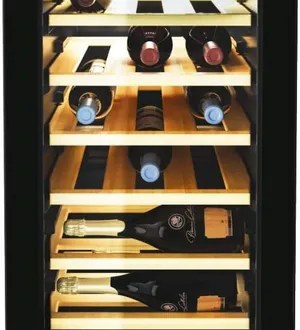
Candy DiVino Wine Fridge
Compact single-zone wine fridge with UV-resistant glass and anti-vibration technology. Quiet thermoelectric cooling stores up to 16 bottles at the ideal temperature for everyday drinking.

Best Dual-Zone Option for Mixed Collections
The Klarstein dual-zone cabinet is the most versatile choice for anyone who regularly drinks both white and red wines. Its two independent circuits let you set each zone within 1°C, which makes a real difference once you notice how a Chardonnay’s texture shifts between 9°C and 13°C. Adjustable shelves accommodate both Bordeaux-style and Burgundy-style bottles, and the compressor version handles warm kitchens without losing its set temperature.
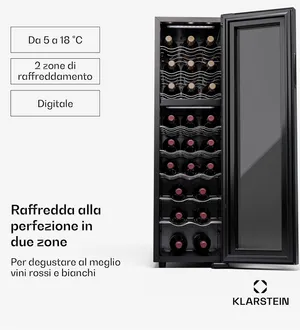
Klarstein Dual-Zone Wine Fridge
Two independent temperature zones for simultaneous storage of red and white wines. Anti-vibration compressor keeps up to 18 bottles stable, with a UV-protected glass door and adjustable shelving.
Wooden Wine Rack — The No-Fridge Alternative
Not every collection needs active cooling. If you consume bottles within two to three weeks of purchase and your home stays below 20°C, a well-built wooden wine rack stores bottles correctly at a fraction of the cost. The 3-in-1 design below combines bottle storage, a stemware holder, and a service surface in a single piece of furniture, making it the most practical option for casual wine drinkers who want organisation without a fridge.
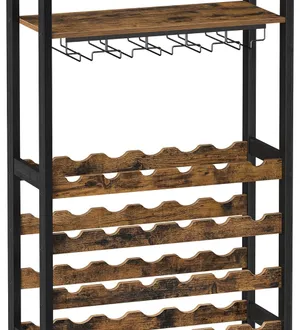
Wine Rack with Glass Holder and Serving Surface
3-in-1 design: bottle rack, stemware holder, and a serving surface in one solid unit. Stores up to 8 bottles and 6 glasses without refrigeration — the right choice for moderate consumption.
Wine Display Cabinet with LED Lighting
For collectors who want bottles visible as part of the room’s aesthetic, a glass-fronted display cabinet with internal LED lighting turns a collection into a design feature. UV-filtering glass protects bottles from light degradation while the backlighting creates a warm atmosphere. This model includes a 20-euro coupon at checkout and fits standard kitchen depths — it works as a statement piece in a dining room or as a practical display in a home bar.
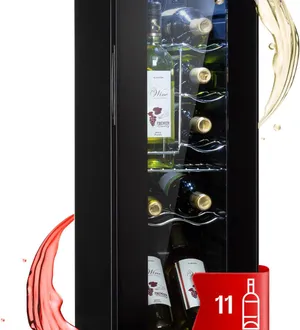
Design Wine Display Fridge with LED
Stainless-steel frame, UV-filtering glass door, and internal LED lighting on adjustable horizontal and vertical shelves. A visual statement piece as much as a working storage solution.
Frequently Asked Questions
What temperature should I set my wine fridge to? For long-term aging, set it to 12-14°C with humidity around 60-70%. For a fridge you drink from daily, use 8-10°C for whites and sparkling wines and 16-18°C for full-bodied reds. The OIV considers 10-15°C the safe range for preserving bottles without accelerating their development.
What is the difference between thermoelectric and compressor wine fridges? Thermoelectric models use no moving parts, run at 25-35 dB, and produce no vibration — the right choice for small collections in temperature-controlled rooms. Compressor models are more powerful, maintain temperature regardless of ambient heat, and scale to larger collections, but run louder (40-55 dB) and generate more vibration. Serious cellaring calls for a compressor unit with anti-vibration mounts.
How many bottles should a wine fridge hold? Buy around 20% more capacity than your current collection. A 12-bottle fridge fills up faster than expected once you start buying by the case. The sweet spot for most households — 30-50 bottles across red, white, and sparkling — is a mid-range dual-zone compressor model in the €200-€350 range.
Do I need a wine fridge for bottles I’ll open within the week? No. Bottles consumed within three to five days are unaffected by minor temperature variations. A wine fridge makes sense when you’re storing bottles for more than a month, aging fine wines over years, or serving from a mixed collection where temperature at the glass actually matters.
Topics
- wine fridge
- preserve