Champagne 2025: Prices Skyrocket, Yields Shrink and Bottles Become Rare
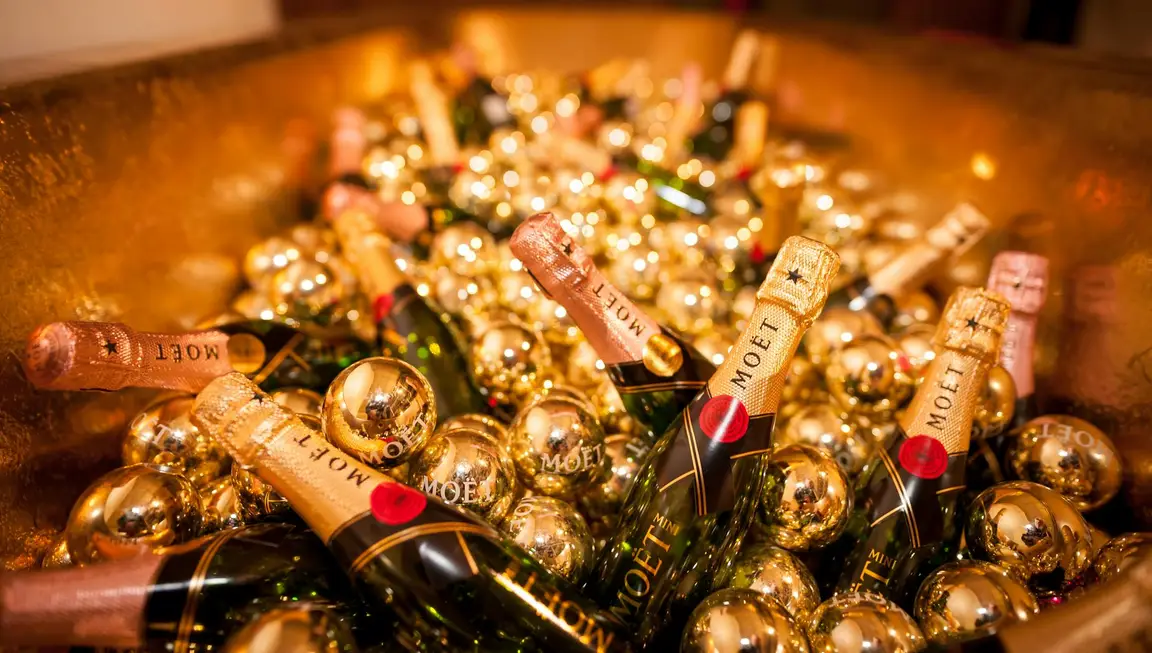
2025 will be remembered as a turning point for the Champagne market. The most prestigious sparkling wine in the world, long tied to luxury and celebration, is entering a new phase defined by lower yields, rising prices and reduced availability.
The shift does not only concern collectors. It reaches anyone who wants to put a bottle on the table for a special occasion.
Falling production: lowest yields in more than 20 years
The Comité Champagne has set the 2025 harvest limit at 9,000 kg/ha, down from 10,000 in 2024 and 11,400 in 2023.
That works out to roughly 255 million bottles, one of the lowest levels this century apart from 2020, the Covid vintage.
Why are yields falling?
- Uncertain economic context: geopolitical instability and volatile consumer behavior
- Climate unpredictability: frost, heavy rains and vine diseases across recent vintages
- Market strategy: lowering volumes to preserve exclusivity and maintain perceived value
Rising prices: luxury becoming less accessible
Steady demand against reduced supply leads to one outcome: sharp price increases. Three drivers explain the trend.
Production costs are the first. Glass, labels, energy and logistics are all more expensive than they were. International demand is the second: the US, UK and Japan continue to pull Champagne sales. Rarity is the third. Fewer bottles mean more competition for the iconic cuvées.
Experts suggest 2025 will mark a new era of Champagne as selective luxury, where only those willing to spend more can reach the most prestigious houses.
Market under pressure: big houses against independent growers
The production drop does not hit everyone the same way.
The big houses (Moët & Chandon, Veuve Clicquot, Ruinart, Dom Pérignon) can absorb it. They have the resources to invest in innovation, sustainability and branding, which reinforces their elite positioning. Independent growers, the vignerons, respond differently: authentic and often more affordable cuvées that put terroir and individuality first.
Across both groups, the same strategies keep coming up:
- Sustainable and biodynamic viticulture to protect long-term quality
- Advanced vineyard technology, such as the Bakus robot for precision work
- Organic certification, increasingly used as a quality and environmental signal
- Diversified offerings: vintage cuvées, blanc de blancs, limited editions for collectors
Key data at a glance
| Year | Yield (kg/ha) | Bottles (est.) | Notes |
|---|---|---|---|
| 2023 | 11,400 | ~290m | Generous harvest |
| 2024 | 10,000 | ~271m | Structural decline begins |
| 2025 | 9,000 | ~255m | Post-Covid historic low |
What this means for consumers
For Champagne lovers, 2025 brings three concrete changes. Prices go up, entry-level labels included. Choosing gets harder, because buying a famous name is no longer enough and the value has moved toward smaller growers. And Champagne shifts further toward the special occasion, away from casual consumption.
Anyone who wants to keep drinking bubbles without overspending should look at Crémant, Franciacorta or Cava, which deliver excellent quality at more accessible prices.
Looking ahead
2025 is not the end of Champagne. It is the start of a more selective era: less volume, more quality, a balance that strengthens the prestige of the region while making access harder for the broader public.
In practice that means planning purchases in advance, leaning on merchants who know their catalogue, and getting comfortable with growers whose names are not yet famous.
Frequently Asked Questions about Champagne 2025 (FAQ)
Why are Champagne prices rising in 2025?
Prices are rising mainly because of lower production yields, higher production costs, and sustained global demand. Together these push the category further toward exclusivity.
How many bottles of Champagne will be produced in 2025?
The yield cap of 9,000 kg/ha translates into roughly 255 million bottles, one of the lowest levels in two decades.
Will Champagne become a luxury for the few?
Not entirely, but Champagne is increasingly tied to selective luxury. Prestige houses may become inaccessible, while independent growers still provide good alternatives.
What are the best alternatives to Champagne?
Excellent substitutes include Crémant, Franciacorta, and Cava, offering high quality at much lower prices.
Is now a good time to buy Champagne?
Yes, but wisely: buy ahead of peak demand seasons (Christmas, Valentine’s Day) and rely on wine merchants to discover hidden gems.
Sources
Topics
- champagne
- french wines
- wine market
- prices 2025
- french bubbles